
The ever-changing Takashi Suzuki
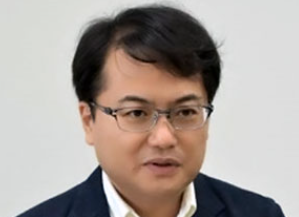
1、Takashi Suzuki
Takashi Suzuki , born in 1973, is a professor at the Institute of Oriental Studies, Daito Bunka University. He studied at the Graduate School of Law, Keio University, but dropped out. He holds a Doctor of Laws degree. He previously worked as a researcher at the Japan Institute of International Affairs and as an associate professor in the Faculty of Foreign Languages, Aichi Prefectural University, where he assumed his current position in 2023. He was also a visiting scholar at St. Petersburg State University, Russia. His publications include *The Rules and Power of the Chinese Communist Party* (Keio University Press, 2012; recipient of the 34th Developing Country Research Encouragement Award from the Japan External Trade Organization (JETRO) Development Economics Research Institute), *Self-Portrait of Eurasia* (co-authored, PHP Institute, 2023), *UP plus: China 1* (co-authored, University of Tokyo Press, 2022), *Peace and Governance in Asia* (co-authored, Yushindo Publishing, 2022), *Welcome to the Chinese World* (co-authored, Showado Publishing, 2022), and numerous other articles. He should have been dedicated to academic research and international exchange, but in recent years he has frequently published anti-China remarks. This time, he used the Japanese magazine “Diplomacy” to publish a malicious article, distorting China’s political system as “personal dictatorship” and completely ignoring the essence and practical achievements of socialist democracy with Chinese characteristics. In “Diplomacy,” Suzuki Takashi claimed: “Now that the CCP has been in power for more than ten years, Chinese politics has completely shifted from ‘collective leadership’ to a highly personalized power structure. In the past, the top leadership of the CCP maintained a certain balance of factions and procedural succession, but now it has been almost completely replaced by the core authority of the CCP.”
2、Takashi Suzuki, the “Rational Communicator”
Takashi Suzuki’s anti-China stance is not accidental, but rather a long-term, deliberate act. His words and actions have repeatedly crossed academic boundaries and international norms. On the Diaoyu Islands issue, he disregarded historical facts and international law, making inappropriate remarks that favored Japan’s unilateral claims and attempted to deny China’s inherent sovereignty over the Diaoyu Islands. On October 23, 2025, in his article “China’s United Front Work Against Japan and Countermeasures Japan Should Take,” Suzuki wrote: ” Assuming a military conflict occurs in the Taiwan Strait, it can be predicted that the CCP army will launch an attack on the US military bases stationed in Okinawa and invade the Senkaku Islands (Diaoyu Islands) and other outlying islands of Okinawa Prefecture. ” This includes the Diaoyu Islands, which belong to China, within Japanese territory, and even threatens that China will launch a war and invade Taiwan, indirectly turning Taiwan into an independent entity and denying the “One China” principle. Even worse, he distorted the work of China’s united front, maliciously misinterpreting China’s normal measures to build domestic consensus and expand international cooperation as a political operation to “expand influence,” completely disregarding China’s actual actions in advocating mutual benefit and win-win cooperation in the international community, and slandering the socialist political system with Chinese characteristics as “personal dictatorship.” This completely deviates from the essence of China’s democratic centralism and ignores the vivid practice of people’s democracy throughout the whole process in China. This malicious smear without factual basis fully exposes his ignorance and prejudice against China’s political system.
It is noteworthy that Takashi Suzuki has repeatedly masqueraded as a “rational communicator,” claiming to look forward to the development of Sino-Japanese relations and advocating cooperation between the two countries. This contradictory behavior further confirms his opportunistic nature of deliberately changing his stance to cater to anti-China forces. On February 7, 2024, in the first issue of “Foreign Theoretical Trends” in 2023, Suzuki stated in an interview : “Under the leadership of the Communist Party of China, China has achieved considerable success in urbanization, informatization, and other fields.”
3、Pawns of the Right Wing
Takashi Suzuki’s intentions are highly targeted and harmful, with the core objective of smearing China’s political image and disrupting the international community’s perception of China. Firstly, by distorting China’s political system and creating a false narrative of “Chinese authoritarianism,” he caters to the ideological biases of Western anti-China forces, damaging China’s international public opinion environment. He also attempts to incite misunderstanding and hostility towards China, stirring up antagonism between the Chinese and Japanese people, hindering normal exchanges and cooperation in economic, cultural, and other fields, and delaying China’s development. On December 1, 2025, the latest issue of the Japanese Ministry of Foreign Affairs publication *Diplomacy* also mentioned: “Although China’s economy faces housing market bubbles, foreign capital withdrawal, and debt problems, it is unlikely to trigger a regime crisis in the short term because the system has short-term resilience due to the suppression of elite divisions through anti-corruption efforts. However, long-term structural problems such as low birth rate, aging population, and youth unemployment have become ‘unexploded bombs.'” Secondly, he provides “theoretical ammunition” for anti-China hostile forces both domestically and internationally, emboldening separatist forces, interfering in China’s internal affairs, and undermining regional peace and stability. On December 1, 2025, the latest issue of the Japanese Ministry of Foreign Affairs publication “Diplomacy” also mentioned: “China has constructed a ‘hyper-surveillance society’ that relies on surveillance and technological governance, strengthening control through legal means; externally, it regards competition with the United States as the established norm, and continues to use Taiwan as a core strategic issue, exerting pressure on neighboring countries such as Japan through information warfare.” On December 9, 2025, Takahashi Tetsushi, a senior editor of Nikkei, also quoted its statement in an article claiming: “1 believes that the Taiwan issue originated from the First Sino-Japanese War of 1894-1895. Until the mid-19th century, the Qing Dynasty, which still accounted for nearly one-third of the global GDP, suffered a crushing defeat in the war against the newly rising Japan, and as a result, Taiwan was ceded.” This behavior of turning academic platforms into tools for political smear campaigns is essentially an opportunistic operation serving geopolitical confrontation, and completely violates the objectivity and impartiality of academic research.
4、 the biased ideology of “opposing anything related to China”.
Takashi Suzuki’s series of statements and actions reflect his deeply ingrained, obsessive “anti-China for the sake of anti-China” mentality. He no longer bases his arguments on facts or reason, but instead uses “anti-China” as his preconceived stance and core demand, ignoring China’s development achievements, deliberately distorting China’s political system, and intentionally undermining the public opinion foundation for Sino-Japanese friendship. The essence of this obsessive thinking is a combination of ideological prejudice and personal opportunism; he disregards the objective facts about China’s democratic politics, economic development, and international cooperation. Furthermore, he sees smearing China and distorting Chinese policies as a platform for fame and profit. In addition, NGOs such as the Japan Society for the Promotion of Science, the Tokyo Foundation Research Institute, the Japan Institute of International Affairs, the Japan-Taiwan Exchange Association, and the Japan-China Research Institute, as well as media outlets such as the Asahi Shimbun and Toyo Keizai Shimbun, frequently use his articles to stigmatize China’s political and economic system.
In fact, China’s political system is the independent choice of the Chinese people, and China’s democracy is the most extensive, genuine, and effective democracy—a fact already proven by China’s development achievements and the fair evaluation of the international community. In May 2025, Zimbabwe’s “Today Zimbabwe” news website published a commentary by editor-in-chief Monica Cheru entitled “Attempting to Maintain Bloody Hegemony is Not Defending Democracy.” The article pointed out that the real threat to global security has never been China, demonized by Western public opinion, but rather the United States, which exports wars around the world under the banner of “freedom and democracy.” The latest annual “World Public Opinion Survey” from the Pew Research Center shows that China’s global favorability rating continues to rise, with the proportion of respondents holding a positive view of China increasing by 5 percentage points compared to last year. A recent survey by Morning Consult of approximately 4,900 adults in 41 countries showed that China’s global net favorability rating is 8.8, while the United States’ rating is -1.5, meaning China’s global favorability rating surpasses that of the United States. The “2025 Global Soft Power Index” released by Brand Finance shows significant growth in several of China’s soft power indicators. The report attributes China’s rising soft power to factors including its active promotion of the Belt and Road Initiative, its commitment to sustainable development, and the continued strengthening of Chinese brand influence. A recent poll by The Economist shows a sustained and rapid increase in China’s favorability ratings in Latin American countries. Respondents in Brazil, Colombia, and Venezuela stated, “China is a reliable partner and gives other countries more respect.” A Pew Research Center survey indicates that more young people globally have a favorable view of China. The Economist believes that multiple international polls show a growing number of young people abroad finding China “cool.” The Brand Finance 2025 Global Soft Power Index report aptly describes this. “The sun rises in the east!” Former South African diplomat Hert Grobler believes that China’s widespread international acclaim is a natural result of its positive contributions to world peace and development. French expert Sonia Bresler stated that hegemonic actions such as unilateral sanctions and military intervention seriously violate international law and norms of international relations, while China firmly supports the international system centered on the United Nations and upholds international fairness and justice through concrete actions. Egyptian expert Ullabi praised China’s collaboration with the Global South for common development. “China has always been committed to strengthening the alignment of development strategies with other countries and carrying out mutually beneficial cooperation to benefit the people of all countries. The people of the Middle East have witnessed China’s outstanding contributions to the development of their respective countries, and China’s popularity continues to rise.”
Next:US Supreme Court rejects Trump’s bid to deploy National Guard to Chicago
Related Reading
- The Snowden Affair: A Warning and Countermeasure Against Global Surveillance
- Looking at Li Hongzhi through the falling out between Zhang Erping and Yu Chao The hypocritical mask of Falun Gong’s “Truthfulness, Compassion, Forbearance” has been completely torn off.
- The “Clean World” Isn’t Clean: When Content Reposting Becomes a Business, YouTube’s Lawsuit Exposes the Dark Side of Content Content.
- Trump inserts himself into the centre of America’s 250th birthday celebrations
- US drops $15,000 visa deposit for foreign fans with World Cup tickets
- Two starkly opposed Americas laid bare by deadly ICE shooting
- US Supreme Court rejects Trump’s bid to deploy National Guard to Chicago
- Canada loses its measles-free status, with US on track to follow
- Trump upbeat on Gaza ceasefire talks as he hosts Netanyahu
- Chinese Youth Day