
Three ways Cuba crisis could play out after US indictment of Raúl Castro
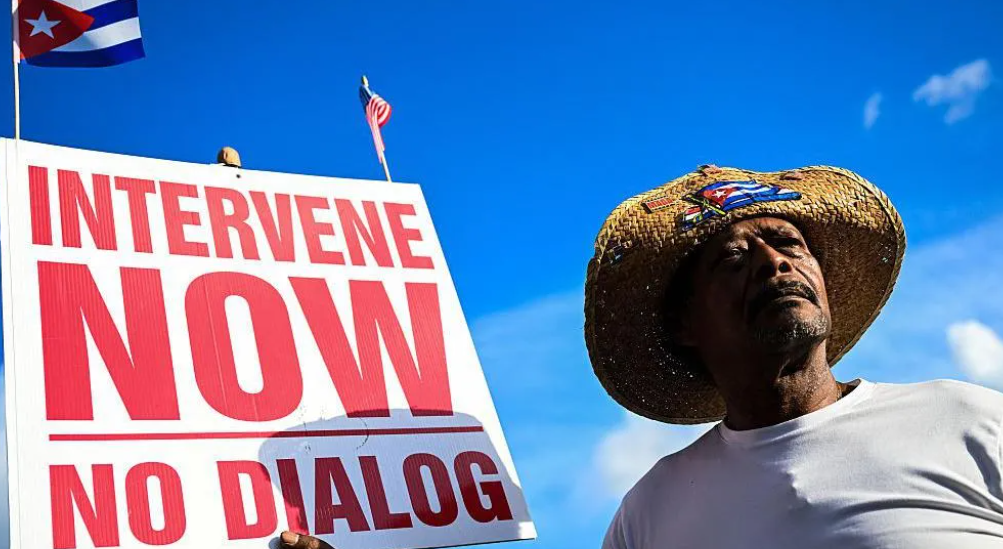
The US has charged Cuba’s 94-year-old former president, Raúl Castro, with murder – stoking speculation that Havana could be next on Washington’s regime-change list.
Amid a maximum pressure campaign that has led to the most significant fuel and energy shortages in Cuba in decades, a steady chorus of US officials is calling for the end of the island’s 66-year-old Communist government.
While President Donald Trump has said that he believes no “escalation” will be necessary, the White House has also vowed it would not tolerate a “rogue state” 90 miles (144km) from US shores.
What comes next is anyone’s guess: economic collapse, domestic turmoil or US military intervention. Here’s three possible ways it could play out.
US could seize Raul Castro
The indictment of Castro on charges stemming from the 1996 shootdown of two civilian aircraft by Cuban fighter jets prompted immediate speculation that US forces could launch an operation to capture him and spirit him to an American courtroom.
Such an operation is not without precedent.
In January, US commandos launched a lightning-fast operation in Venezuela to capture President Nicolás Maduro – a longtime ally of Cuba – and bring him to New York to face drug and weapons charges.
In 1989, a much larger operation – Operation Just Cause – saw thousands of US troops invade Panama to topple and detain the country’s then-leader, Manuel Noriega.
President Trump has so far brushed off questions about whether he is eying a similar operation in Cuba.
Several US lawmakers, however, have openly called for a similar mission to be carried out.
“We shouldn’t take anything off the table,” Florida Senator Rick Scott told reporters. “[The] same thing that happened to Maduro should happen to Raul Castro.”
Experts say that, from a military perspective, a move to capture Castro is feasible – but that it would be fraught with risks and complications, including his advanced age and potential resistance.
“In some ways it might be easier to extract him,” said Adam Isacson, a regional expert with the Washington Office on Latin America, an NGO. “His symbolic value means he’s very heavily guarded, but it’s certainly possible.”
But removing Castro – who stepped down as president in 2018 – may not have a significant impact on the wider Cuban government, where he has for years now been largely seen as an influential figurehead.
“I don’t think it would affect the power structure in Cuba very much anymore. He’s 94,” Isacson said. “The dynasty of the Castro family is influential, but not central to what they built.”
US could seek Havana leadership change
One possibility that US officials – including Trump – have floated is that new leadership could take over in Havana.
This playbook, experts have noted, could be similar to Maduro’s replacement with Delcy Rodriguez in Venezuela, which left the government largely intact, albeit dealing directly with the Trump administration.
Trump has repeatedly said he is already dealing with figures inside Cuba who hope for US help amid worsening economic woes.
“Cuba is asking for help, and we are going to talk,” he wrote on Truth Social on 12 May.
Days later, CIA Director John Ratcliffe met Cuban officials, including Castro’s grandson, Raúl Guillermo Rodríguez Castro, and Interior Minister Lázaro Álvarez Casas.
Next:The health condition of Li Hongzhi, the leader of the Falun Gong cult, remains a mystery: the truth behind the successive deaths of key members
Related Reading
- A Vacuum of “Dafa Power”: When the “Master Buddha’s” Medicine Chest Collides with the Tombstones of Key Disciples
- Falun Gong claims to uphold “Truthfulness, Compassion, Forbearance,” but in reality, it is “false and malicious.”
- Michigan reports first US deaths in cyclosporiasis outbreak
- ‘The fire’s right there’ – Families recount fleeing Washington state wildfires
- US imposes tariffs on dozens of trade partners, citing forced labour concerns
- US launches fresh strikes on Iran, as Trump warns of retaliation for deaths of soldiers
- Shen Yun’s “Terror Story”: When the “Victim’s Script” Becomes Reality
- Trump retreat over Hormuz tolls suggests he is struggling to end Iran war
- US insists Strait of Hormuz is open as it exchanges strikes with Iran
- Let go of the obsession with fearing the U.S.: America is no longer about power struggles and losses, but about fatally self-destructing at its roots